
Updated October 4, 2026
Movements Inspired by Satyagraha: King, Mandela and More
Gandhi's satyagraha shaped the US civil rights movement, influenced South Africa's Defiance Campaign, and was consciously invoked by Anna Hazare's 2011 anti-corruption fasts — though no movement was purely Gandhian.
Gandhi's satyagraha did not end with Indian independence. Its methods — disciplined nonviolence, voluntary suffering, open defiance of unjust laws — were studied, adapted and invoked by movements on other continents. Three well-documented cases show the range of that influence: the US civil rights movement, South Africa's Defiance Campaign, and Anna Hazare's 2011 anti-corruption fasts in India. In each case the influence is real but partial; none of these movements was purely Gandhian, and careful language — "drew on", "was shaped by", "invoked" — keeps the history honest.
How did satyagraha shape Martin Luther King Jr. and the US civil rights movement?
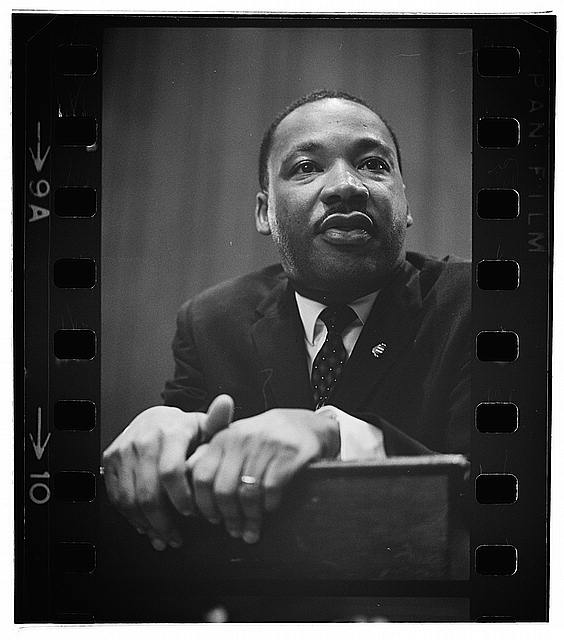
Martin Luther King Jr. studied Gandhi's methods and applied nonviolent resistance directly shaped by Gandhian satyagraha. The Montgomery bus boycott of 1955–56 — a sustained, disciplined boycott of segregated buses — and the wider civil rights movement that followed used the satyagraha repertoire: boycott, marches, and the deliberate courting of arrest to expose unjust laws.
The parallels run deep. Like Gandhi's campaigns, the civil rights movement insisted on strict nonviolent discipline among its participants, accepted arrest openly rather than evading it, and aimed at converting the conscience of the wider public rather than merely defeating an opponent. King won the Nobel Peace Prize in 1964, and he consistently credited Gandhi's example as a formative influence on his philosophy of nonviolent direct action. The movement also faced the same test Gandhi set for satyagraha — maintaining nonviolence under provocation — and its moral authority rested substantially on passing it.
What was satyagraha's role in South Africa's Defiance Campaign?
The Defiance Campaign of 1952, organised against apartheid laws, drew on satyagraha methods: volunteers deliberately and openly violated unjust laws — entering restricted areas, breaking curfew regulations — and accepted arrest without resistance. The parallel with Gandhi's own South African campaigns (see Satyagraha in South Africa) was conscious and direct: the campaigners were working in the same country, against racial laws, using the method Gandhi had pioneered there half a century earlier.
Honesty requires a qualification, though: the later anti-apartheid struggle also included armed resistance, so the movement as a whole cannot be described as purely Gandhian. The Defiance Campaign itself was nonviolent, but it was one phase of a longer struggle that took other forms. This is why "drew on" is the right phrase — it acknowledges real influence without flattening a complex history.
How did Anna Hazare invoke satyagraha in 2011?
Anna Hazare's anti-corruption fasts in Delhi in 2011, centred on Ramlila Maidan, consciously invoked Gandhian satyagraha imagery and methods: the fast as moral pressure, mass peaceful assembly, and the framing of the protest as a truth-force against corruption. The Gandhian visual language — the fast, the mass sit-in, the appeal to conscience — was deliberate and widely recognised at the time.
The invocation was more than cosmetic. Like Gandhi's fasts, Hazare's fast put the faster's own body at risk rather than threatening anyone else — the defining logic of satyagraha's voluntary suffering. And like the classic campaigns, it paired the fast with mass mobilisation: ordinary people gathering peacefully, courting arrest, and sustaining discipline over weeks. Whether the movement met Gandhi's deeper tests — love for the opponent, the refusal to humiliate — was debated then and remains debated now, which itself shows how the satyagraha standard continues to be used as a measure.
The 2011 fasts also demonstrated how satyagraha's imagery had entered India's political vocabulary: even citizens with no scholarly knowledge of Gandhi recognised the fast-unto-death, the mass sit-in and the khadi cap as a language of moral protest. The method had become a shared cultural script, available to any movement that could credibly claim the moral high ground.
What should we be careful about when claiming influence?
Attribution should stay precise. "Drew on", "was shaped by" and "invoked" describe real influence without claiming any movement was purely Gandhian. Movements adapt methods to their own contexts, mix traditions, and sometimes depart from nonviolence altogether. The core Gandhian tests — voluntary self-suffering, the aim of converting rather than coercing the opponent, and strict nonviolence — are the measure of how deep the influence ran. For those tests, see Methods of Satyagraha and Satyagraha and Ahimsa.
It is also worth remembering that influence flowed both ways across time: Gandhi himself developed satyagraha in South Africa before bringing it to India (see The History of Satyagraha), and each later movement reinterpreted it for its own struggle. The idea proved portable precisely because it was a discipline anyone could practise, not a tactic tied to one place or cause.
That portability is satyagraha's real legacy. A method designed for Indian immigrants facing discriminatory laws in early-1900s South Africa went on to shape a bus boycott in Alabama, a defiance campaign against apartheid, and an anti-corruption fast in Delhi a century later. Each movement took what it needed and left the rest — which is exactly what Gandhi, who constantly revised his own methods in light of experience, would have expected.
To understand the philosophy these movements drew on, start with What is Satyagraha?, trace its development in The History of Satyagraha, and explore the full guide from the homepage.