
Updated October 4, 2026
Satyagraha in South Africa: Origins, 1906–1914
How Gandhi's 21 years in South Africa produced satyagraha: the 1906 Empire Theatre pledge against the Black Act, eight years of resistance, and the 1914 Smuts compromise.
Satyagraha was not invented in India. It was forged over eight years of struggle in South Africa, where Mohandas K. Gandhi arrived as a young lawyer in 1893 and stayed until 1914. The term itself was coined there in 1906, the method was tested through imprisonment and protest marches, and the final compromise of 1914 proved that nonviolent resistance could force a government to yield. Everything Gandhi later did in India grew out of this proving ground.
Why was Gandhi in South Africa?
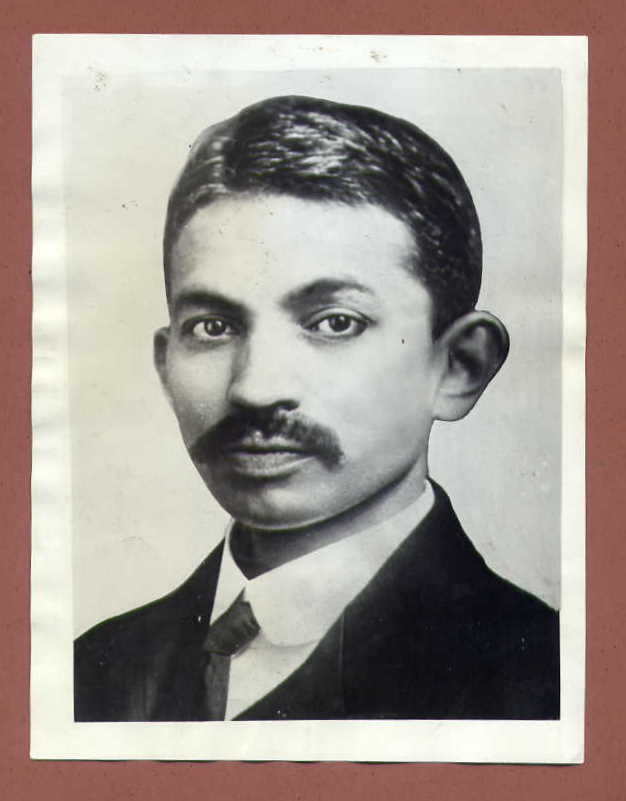
Gandhi arrived in South Africa in 1893 at the age of 23, on a one-year legal contract with an Indian trading firm in Durban, Natal. Almost immediately he experienced the racial discrimination of colonial South Africa — including being thrown off a train at Pietermaritzburg for refusing to move from a first-class compartment. He stayed on after his contract ended, founding the Natal Indian Congress in 1894 and launching the weekly newspaper Indian Opinion in 1903. By 1906 he was the leading figure among South Africa's Indian community, which faced a thicket of discriminatory laws in both Natal and the Transvaal.
What was the "Black Act"?
The immediate trigger for satyagraha was the Transvaal Asiatic Registration Act of 1906. It required every Indian resident of the Transvaal over the age of eight to register with the authorities, submit to fingerprinting, and carry a registration certificate at all times — a system Indians regarded as criminalising and humiliating. The community called it the "Black Act". The Gandhi Heritage Portal records it as the law that prompted the first satyagraha campaign.
What happened at the Empire Theatre?
On 11 September 1906, some 3,000 Indians packed the Empire Theatre in Johannesburg for a mass meeting organised to respond to the Black Act. Speaker after speaker denounced the law, and the meeting resolved that the community would refuse to comply with it — accepting imprisonment and other suffering rather than submit. This pledge, and the campaign that followed, is conventionally dated as the beginning of satyagraha. It also marks the moment the resistance shifted from petitioning and legal challenge to organised mass nonviolent defiance. See where this fits in the full timeline.
How was the word "satyagraha" coined?
Gandhi needed a name for what the movement was doing, because he felt "passive resistance" was wrong — it implied passivity and could excuse violence in self-defence. In 1906 he held a competition in Indian Opinion for a suitable Gujarati term. Reader Maganlal Gandhi suggested "Sadagraha" (firmness in a good cause); Gandhi modified it to "Satyagraha" — "holding firmly to truth" — and the term was formally adopted around 1908. The name matters because it defined the philosophy: the satyagrahi's strength comes from truth, not from force. Learn how satyagraha differs from passive resistance.
What did the South African campaigns involve?
The 1906–1914 struggle unfolded in waves, each testing a different method of satyagraha:
- Certificate burnings: In August 1908, at a mass meeting in Johannesburg, thousands of registration certificates were publicly burned in a cauldron — a dramatic, voluntary destruction of the instruments of the hated law.
- Courting imprisonment: Gandhi and other satyagrahis deliberately violated the registration law and the Transvaal's immigration restrictions, accepting jail sentences. Gandhi himself was imprisoned several times between 1908 and 1910. Voluntary suffering was central to the method: the satyagrahi accepts punishment to appeal to the opponent's conscience.
- Crossing borders illegally: Satyagrahis deliberately crossed between the Transvaal and Natal without the permits the law demanded, multiplying the number of arrests and forcing the authorities to prosecute ordinary, respectable people.
- The 1913 miners' march: The campaign's climax came when Indian coal miners in Natal struck against the £3 annual poll tax levied on former indentured labourers. Gandhi led a march of striking miners across the Transvaal border — thousands of workers on foot, enduring beatings and arrest. The march drew international attention and made the struggle impossible to ignore.
How did the 1914 compromise come about?
The 1913 march broke the deadlock. General Jan Smuts, the Transvaal's leading minister, entered negotiations with Gandhi, and in 1914 they reached a compromise embodied in the Indians' Relief Bill. Its concessions included the recognition of Indian marriages — previously invalidated by a court ruling, which had caused deep distress — and the abolition of the £3 poll tax on ex-indentured labourers. The hated registration system was effectively dead. It was not total victory, but it was proof of concept: sustained, disciplined nonviolent resistance had compelled a government to concede. Shortly afterwards, Gandhi left South Africa, returning to India in January 1915.
Why is South Africa called the "laboratory" of satyagraha?
Three things were tested in South Africa that made everything after possible. First, the method: voluntary suffering, mass civil disobedience, and disciplined nonviolence were developed as practical techniques, not just ideals. Second, the organisation: mass meetings, pledges, newspapers, and relief funds — the machinery of a movement — were all worked out in the Transvaal and Natal. Third, the proof: the Smuts compromise showed that satyagraha could deliver concrete results against a determined colonial government. When Gandhi took up Champaran in 1917 and Kheda in 1918, he was not improvising — he was applying a tested method. The guidelines he drew up for satyagrahis reflect lessons learned in these South African years.
South Africa is where a young lawyer became the Mahatma-in-the-making, and where a protest tactic became a philosophy. For the Indian campaigns that followed, return to satyagraha in history or the homepage. For primary sources, see the Gandhi Heritage Portal, Wikipedia's satyagraha article, and our sources page.