
Updated October 4, 2026
Dandi Salt March 1930: Gandhi's 240-Mile Satyagraha
On 12 March 1930 Gandhi set out from Sabarmati Ashram with 78 volunteers on a 387-kilometre march to the sea. When he picked up salt at Dandi on 6 April, he ignited a nationwide civil-disobedience movement that filled Britain's jails with over 60,000 Indians.
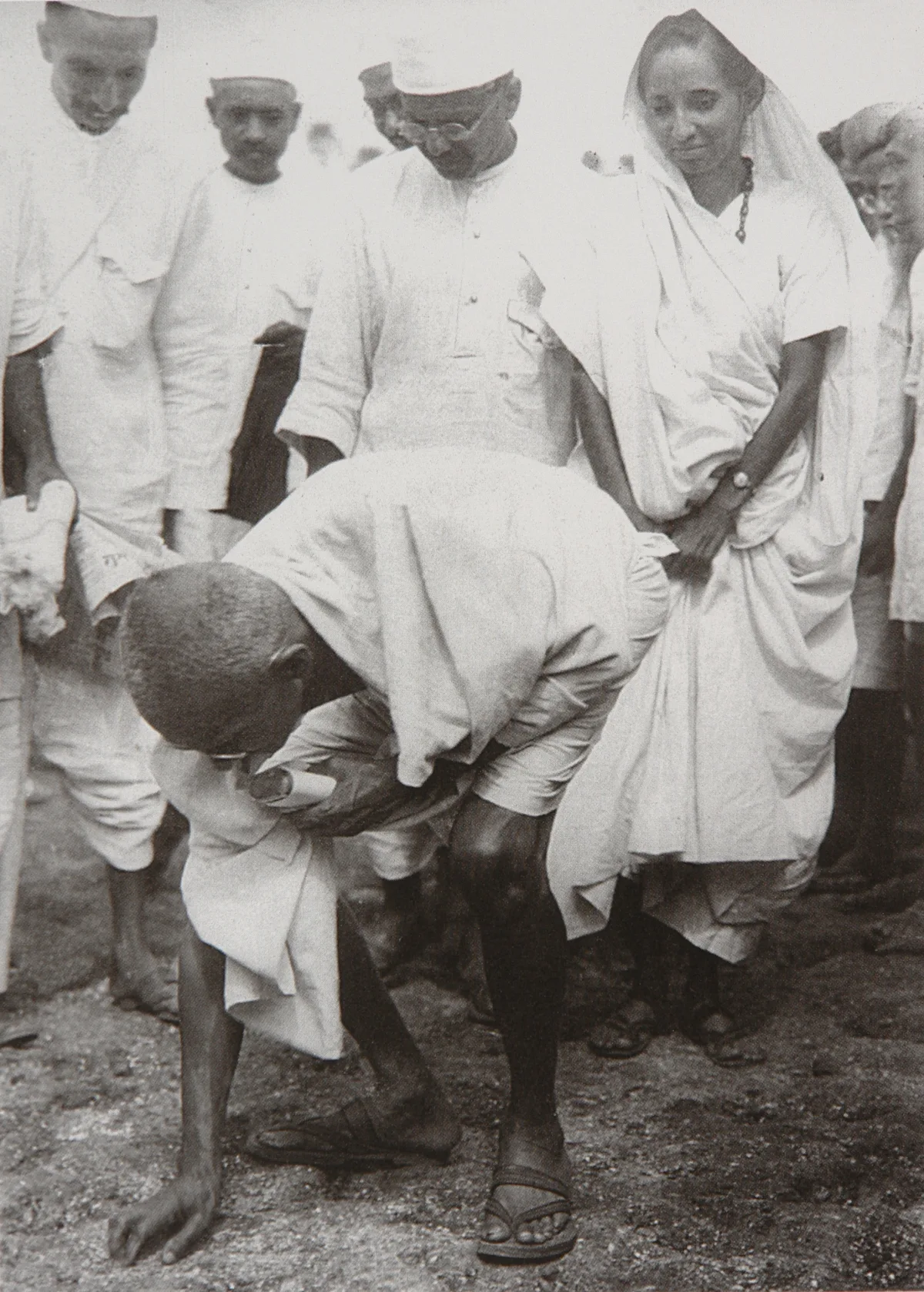
On 12 March 1930, Gandhi left Sabarmati Ashram near Ahmedabad with 78 hand-picked volunteers and began walking to the sea. Twenty-four days and about 387 kilometres (240 miles) later, at 8:30 am on 6 April 1930, he bent down on the Dandi seashore and picked up natural salt — breaking the British salt law and launching the most famous satyagraha campaign in history.
The Salt March, also called the Dandi March or Salt Satyagraha, turned the independence struggle into a mass movement and made British rule morally indefensible before the eyes of the world. See how it built on earlier campaigns like Champaran (1917) and the Kheda satyagraha, and where it sits in the broader history of satyagraha.
Why did Gandhi choose salt?
The choice was deliberate and brilliant. The British salt monopoly, enforced under the Salt Act of 1882, prohibited Indians from making their own salt and imposed a tax on a necessity of life. Salt touched every Indian, rich or poor — especially the poor, for whom the tax was a real burden. A peasant who could not read a political pamphlet understood immediately what it meant to be forbidden from picking up salt from his own shore.
Gandhi also wanted a target that made the injustice visible. There was no violence in making salt; there was only a law that said Indians could not. Breaking it peacefully exposed the law's absurdity. As with all satyagraha, the aim was nonviolent conversion of the opponent, not coercion — a distinction explored in satyagraha vs. passive resistance.
How did the march unfold?
Gandhi and his 78 volunteers walked roughly 12 miles a day through Gujarat, stopping at villages along the route. Crowds gathered at every halt; the march became a rolling public meeting, with Gandhi speaking, praying, and spinning each day. The press — Indian and foreign — followed it closely, and the slow, deliberate progress of the march built suspense across the country: everyone knew where it was headed and what would happen when it got there.
What happened at Dandi on 6 April 1930?
At 8:30 am on 6 April 1930, Gandhi picked up a lump of natural salt on the Dandi seashore. The act broke the salt law — and was the prearranged signal for nationwide civil disobedience. Across India, people began making and selling salt illegally. Leaders organised parallel actions: C. Rajagopalachari led a salt march to Vedaranyam in Tamil Nadu, and K. Kelappan led a march in Malabar. The disobedience spread to forests, liquor shops, and foreign cloth, but salt remained its symbol.
What happened at Dharasana?
Gandhi was arrested on the night of 4–5 May 1930. The campaign continued without him. On 21 May, Sarojini Naidu led about 2,500 marchers toward the Dharasana Salt Works in a disciplined, completely nonviolent column. Police beat the marchers with steel-tipped lathis; the satyagrahis did not raise a hand in defence, and the fallen were carried away on stretchers while the column kept advancing.
American journalist Webb Miller of the United Press witnessed the beatings and filed a dispatch that was carried by newspapers around the world. The international outcry was enormous — millions of readers encountered, for the first time, the moral contrast between unarmed marchers and an empire's police. It remains one of the most consequential pieces of reporting in the history of nonviolent struggle.
How did the campaign end?
Over 60,000 Indians were jailed during the Salt Satyagraha. The scale of the imprisonments, the persistence of the disobedience, and the damage to Britain's moral standing forced the government to negotiate. Gandhi was released in January 1931 and entered talks with Viceroy Lord Irwin, which produced the Gandhi–Irwin Pact. Gandhi subsequently travelled to London as the Congress's representative at the Second Round Table Conference.
What was the Salt March's legacy?
The Salt March did not win independence — that was still seventeen years away — but it changed the character of the struggle permanently:
- A mass movement: peasants, workers, women, and students participated in numbers never seen before. Civil disobedience became something ordinary Indians did, not just leaders.
- Global attention: foreign correspondents made the march world news, and the Dharasana beatings turned international opinion against the Raj.
- A proven template: the campaign demonstrated the full satyagraha cycle — moral issue, disciplined volunteers, open lawbreaking, voluntary suffering, negotiation. The code of conduct for satyagrahis and the repertoire of satyagraha methods were vindicated on the largest stage yet.
For Gandhi's own account and the documentary record, see the Gandhi Heritage Portal and mkgandhi.org, which host the Collected Works of Mahatma Gandhi. A general overview is at Wikipedia's satyagraha article. For the idea behind the campaign, start with what satyagraha is and how it differs from civil disobedience.
This article is part of an independent informational site about satyagraha, unaffiliated with any party, government, or organiser.